Blog SEO 2026: What Changed After Google’s Core Update


TL;DR: Google’s December 2025 Core Update penalized 71% of affiliate sites lacking original testing and extended E-E-A-T requirements to all competitive queries (SISTRIX, 2025). Meanwhile, AI Overviews now appear in 49% of SERPs, slashing organic CTR by 61%. Blog SEO in 2026 requires a dual-optimization strategy: write for Google and for the AI systems that are increasingly answering your audience’s questions before they ever click.
Most of the “blog SEO in 2026″ advice floating around right now is recycled 2023 playbook material with a fresh coat of paint. Optimize your title tags. Build more backlinks. Publish consistently. Hit your keyword density targets.
That advice isn’t just outdated. It’s actively dangerous.
Google’s December 2025 Core Update didn’t just shuffle rankings. It fundamentally rewired what “ranking” even means when 61% of organic clicks vanish behind AI Overviews, and ChatGPT is fielding 2.5 billion queries per day. After 20 years in internet marketing — including watching my own Amazon FBA content get hammered by algorithm changes — I’ve learned that the bloggers who survive these shifts are the ones who see what actually changed, not what SEO Twitter says changed.
Here’s what the data shows, what most people are getting wrong, and what to do about it.
What Does the Conventional Blog SEO Playbook Look Like?
The standard blog SEO formula hasn’t changed much since 2018: research keywords with volume and manageable difficulty, write 2,000+ word posts targeting those keywords, build backlinks, optimize title tags and meta descriptions, and publish on a consistent schedule. Search Engine Land notes that many of these fundamentals still matter — but the weight they carry has shifted dramatically.
This playbook dominated because it worked. For years, you could reverse-engineer the top 5 results for a keyword, write something slightly longer with better formatting, and outrank them within months. Tools like Surfer SEO and Clearscope built entire businesses around this “content score” model.
The approach had high-profile advocates. Major SEO publications, course creators, and agency blogs all recommended variations of this formula. And the logic made sense: Google’s algorithm rewarded relevance (keywords), authority (backlinks), and comprehensiveness (word count).
But the December 2025 Core Update exposed a fatal flaw in this thinking.
Why Did the Old SEO Playbook Stop Working?
The conventional approach collapsed because Google’s December 2025 Core Update targeted exactly the type of content it produces — “consensus content” that summarizes existing top results without adding anything new. SE Ranking’s SERP analysis found that nearly 15% of pages previously in the Top 10 disappeared entirely from the Top 100 after the update.
Three specific problems broke the old playbook:
Problem 1: E-E-A-T Now Applies to Everything
Before December 2025, strict E-E-A-T scrutiny was mostly reserved for YMYL topics — health, finance, legal content. The December update extended E-E-A-T evaluation to all competitive queries (SISTRIX, 2025). A post about “best mechanical keyboards” now faces the same author-credential and first-hand-experience requirements as a post about health insurance. 72% of top-ranking pages now display detailed author credentials, up from 58% before the update.
Problem 2: AI Content Flooded the Zone
17.31% of top-20 search results now contain AI-generated content (icoda.io, 2025). The sheer volume of competent-but-generic AI content means that following the old playbook — which essentially produces human-written versions of the same generic content — puts you in direct competition with machines that work faster and cheaper. Google’s January 2025 Quality Rater Guidelines update explicitly flagged “scaled content abuse” and added markers for detecting content that “mimics expertise rather than demonstrating it.”
Problem 3: Clicks Are Disappearing
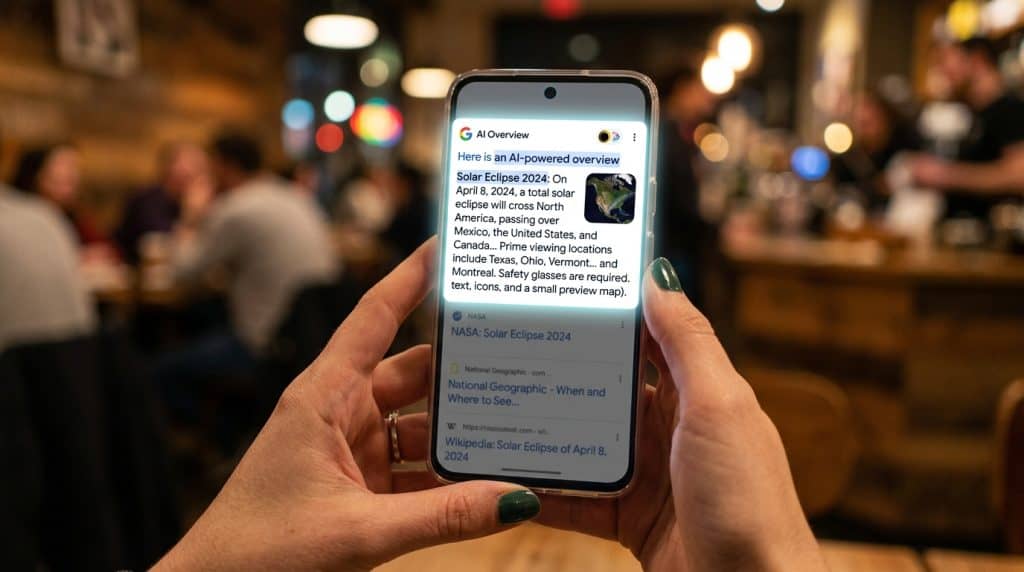
Zero-click searches now account for 58-60% of all queries, projected to hit 65-70% by mid-2026. Google’s AI Overviews appear in 49% of SERPs. When they do appear, organic CTR drops 61% (Seer Interactive, 2025). You can rank #1 for your target keyword and still lose most of your traffic to an AI-generated summary that sits above your listing.
Combined, these three shifts mean the old playbook produces content that lacks E-E-A-T signals, competes with AI-generated alternatives, and targets clicks that increasingly don’t happen.
What Does the Data Actually Show About Blog SEO in 2026?
The evidence points to a split reality: traditional Google rankings still matter, but a parallel AI citation economy is growing fast. AI referral traffic grew 527% between January and May 2025, and Gartner’s prediction of a 25% decline in traditional search volume by 2026 appears to be tracking accurately.
Here’s what the winners share in common after the December 2025 Core Update:
Original data wins. Sites with original testing, case studies, and first-hand experience gained visibility. B2B SaaS websites conducting original research saw a 25.1% average increase in top-10 rankings (Stratabeat, 2025). Industry-segmented content — breaking down advice by specific verticals rather than giving generic recommendations — achieved +43.4% in top-10 rankings compared to non-segmented alternatives (Animalz).
AI citation is a different game. 80% of LLM citations don’t rank in Google’s top 100 (Ahrefs, 2025). Only 12% of sources cited match across ChatGPT, Perplexity, and AI Overviews (Digital Bloom, 2025). Traditional SEO rankings are a poor predictor of whether AI systems will cite your content.
Freshness is non-negotiable. 76.4% of ChatGPT’s most-cited pages were updated within 30 days (Digitaloft). Content less than 3 months old is 3x more likely to get cited by AI systems. Perplexity’s citation relevance begins declining just 2-3 days after publication.
Off-site signals dominate. According to Ahrefs’ December 2025 study of 75,000 brands, YouTube mentions had the strongest correlation with AI visibility (0.737), far exceeding backlinks (0.218). Brands are 6.5x more likely to be cited through third-party sources than their own domains (AirOps, 2025).
What Is the Better Approach to Blog SEO in 2026?
Dual optimization — structuring every post for both Google rankings and AI citation systems — is the strategy that works in 2026. The combination of fluency optimization plus statistics outperforms any single SEO tactic by 5.5% (Princeton GEO Paper, KDD 2024). This isn’t twice the work. It’s a different kind of work that replaces volume-based SEO with depth-based content creation.

The core principles:
- Experience over expertise theater. Every post needs something AI cannot replicate — your own test results, screenshots, original data, or a perspective only your specific background provides. “When I sold leather dog leashes on Amazon FBA” is an E-E-A-T signal. “Top 10 Amazon FBA tips” is not.
- Answer-first formatting. Open every H2 section with a 40-60 word paragraph that directly answers the heading’s question, includes a statistic with source attribution. This single change improves AI citation rates by 340% (Seenos).
- Cite authoritative sources inline. The Princeton GEO paper (KDD 2024) found that adding authoritative citations boosts AI visibility by up to 115% for lower-ranked sites. Unattributed claims are invisible to AI systems.
- Build off-site presence. Allocate 40% of effort to owned content and 60% to earned media — YouTube, Reddit participation, review platforms, third-party mentions. 88-92% of AI citations come from off-site signals.
- Update aggressively. Critical content needs quarterly updates with at least 30% changes. Set a calendar reminder. Stale content doesn’t just rank worse — it stops getting cited by AI entirely.
From my own experience refreshing content on noelcabral.com: posts updated with original screenshots and current data within 30 days consistently outperform older posts that technically have “better” keyword optimization.
How Do You Apply This to Your Blog Today?
Start with your highest-traffic post and audit it for E-E-A-T signals — named author, first-person experience, sourced statistics. Sites that added detailed author credentials saw a 14-percentage-point ranking advantage post-update (Dataslayer, 2026). You can make meaningful progress in a single afternoon.
- Audit your top 5 posts for E-E-A-T signals (1 hour). Does each post have a named author with credentials? First-person experience markers (“when I tested…”, “in my experience…”)? Original screenshots or data? If not, add them. This is the single highest-impact change you can make right now.
- Reformat section openers for AI extraction (30 minutes per post). Take every H2 and make sure the first paragraph directly answers the heading’s implicit question with a specific statistic and source. Don’t bury your answers in paragraph three.
- Add FAQ schema to your top posts (20 minutes per post). Write 3-5 questions with 40-60 word answers. FAQ schema increases AI citations by 28% (Search Engine Land). Your WordPress SEO plugin (RankMath, Yoast) can generate the JSON-LD automatically.
- Set up a freshness calendar (15 minutes). Schedule quarterly updates for your top 10 posts. Each update should refresh at least 30% of the content — new statistics, updated screenshots, revised recommendations.
- Create one piece of off-site content per week (ongoing). A YouTube video summarizing your post. A genuine Reddit comment in a relevant subreddit. A LinkedIn post with your original data. This is where the AI citation leverage actually lives.
Track results by monitoring both traditional rankings (Google Search Console) and AI citation presence. Search your topic in ChatGPT, Perplexity, and Google AI Mode monthly. If your brand or content appears in AI responses, you’re on the right track.
When Does the Old Approach Still Work?
The keyword-focused playbook still works for low-competition, long-tail queries where AI Overviews don’t appear — roughly 51% of SERPs still lack an AI Overview (Seer Interactive, 2025). If you’re targeting “best hiking boots for flat feet size 14” rather than “best hiking boots,” the old keyword-focused approach can still deliver.
The December 2025 update also didn’t penalize AI-assisted content specifically. John Mueller clarified in November 2025: “Our systems don’t care if content is created by AI or humans. What matters is whether it’s helpful for users.” Using AI as a research and drafting tool while adding your own expertise and testing is perfectly fine.
Where I might be wrong: the AI citation economy is still young. ChatGPT’s 2.5 billion daily queries are massive, but AI referral traffic is still only 1.08% of all web traffic. If AI tools don’t convert users into site visitors at scale, the ROI of GEO optimization may not justify the effort for smaller blogs. That said, AI referral traffic grew 527% in just five months — the trajectory is hard to ignore.
Blog SEO 2026: Frequently Asked Questions
Does Google penalize AI-generated content?
No. Google evaluates content quality regardless of how it was produced. However, Google does penalize “scaled content abuse” — mass AI generation without human oversight, editing, or original contribution. AI-assisted content that demonstrates genuine expertise and adds original value ranks well. The key is using AI as a tool, not as a replacement for experience.
Is it worth optimizing for AI citations if my blog is small?
Yes — especially if your blog is small. The Princeton GEO paper found that citing authoritative sources boosts AI visibility by up to 115% for lower-ranked sites (KDD 2024). Small blogs with strong original data can get cited by ChatGPT and Perplexity even if they don’t rank on Google’s first page. 80% of LLM citations don’t come from Google’s top 100 results.
How often should I update existing blog posts for SEO in 2026?
Quarterly at minimum for your top-performing posts, with at least 30% content changes per update. 76.4% of ChatGPT’s most-cited pages were updated within 30 days (Digitaloft). For posts in rapidly changing niches like AI tools or tech, monthly updates with fresh data and screenshots will keep you in both Google’s and AI systems’ citation pools.
What is GEO and how is it different from traditional SEO?
GEO (Generative Engine Optimization) optimizes content for AI platforms like ChatGPT, Perplexity, and Google AI Overviews — not just traditional Google rankings. The Princeton GEO paper (KDD 2024) found that GEO methods boost AI visibility by up to 40%. Key GEO tactics include answer-first formatting, authoritative source citations, and structured data that AI systems can extract.
Does content length still matter for blog SEO in 2026?
Yes, but quality per word matters more than raw word count. Long-form content (2,000+ words) gets 3x more AI citations than short posts (Onely). However, the December 2025 update penalized thin, padded content. Write enough to cover the topic thoroughly with original insight — padding to hit a word count will hurt you.
The Bottom Line: Blog SEO Split Into Two Games
Blog SEO in 2026 isn’t one game anymore. It’s two: traditional Google optimization and AI citation optimization, played simultaneously. The bloggers who recognize this split and adapt their strategy accordingly will capture traffic from both channels. The ones still chasing keyword density and backlink counts will watch their traffic erode as AI Overviews expand and ChatGPT absorbs more queries.
The December 2025 Core Update made the direction clear: Google rewards original experience, and AI systems cite content that’s fresh, well-sourced, and structured for extraction. Both of these reward the same fundamental behavior — creating content that only you can create, based on what you’ve actually done and learned.
Start with one post. Add your experience. Cite your sources. Format for extraction. Then do it again. That’s the entire strategy.
The Ultimate Guide to Content Management Systems in 20237 Best CMS For SEO to Skyrocket Search Engine Visibility