Amazon FBA Case Study: What I Learned Selling $264K on Amazon (Full Breakdown)

TL;DR: I built an Amazon FBA business that generated $264,000 in revenue across three private label products over 18 months, averaging 30% profit margins on a $9,000 total investment. The biggest win was product bundling for differentiation. The biggest loss was trusting an unvetted logistics partner who disappeared with thousands of dollars in inventory.
How Does a $9,000 Investment Turn Into $264,000 in 18 Months?
Between 2016 and 2017, I sold $264,000 worth of private label products on Amazon FBA while still serving in the military. That’s not a typo, and it’s not a guru pitch. It’s a real number from a real business that I started with about $3,000 per product and a lot of late nights.
I’m sharing this because 72% of new Amazon sellers never list a product or make a single sale (Marketplace Pulse, 2024). That number hasn’t changed much since I started. Most people quit before they learn anything useful.
This isn’t a “how to get rich on Amazon” post. Consider this an Amazon FBA case study — a breakdown of what actually happened with the numbers, the mistakes, and the lessons that still apply to any business I touch today.
What Was the Challenge of Starting an FBA Business While on Active Duty?
Amazon now takes over 50% of a typical seller’s revenue in combined fees, up from roughly 40% five years ago (Marketplace Pulse, 2024). When I started in 2016, the fee structure was more forgiving, but the core challenge was the same: how do you build a business that survives Amazon’s cut and still makes money?
I was in the last two years of my military career. That meant a full-time job with unpredictable hours, a transition out of the service on the horizon, and zero room for a business that demanded constant babysitting. I needed something that could run mostly on systems once I got it moving.
The obvious approach would have been retail arbitrage — buying clearance items and reselling them on Amazon. Faster to start, lower investment. But arbitrage sellers typically earn 5-15% margins compared to 20-35% for private label (Jungle Scout, 2024). I didn’t want to build a business on thin margins and constant sourcing. I wanted something with a moat.
The problem was that I had no ecommerce experience beyond knowing the internet well. I’d spent 20 years in marketing and understood how people buy things, but manufacturing a physical product and shipping it through Amazon’s system was a completely different game.
What Strategy Did I Use to Stand Out From a Million Other Sellers?
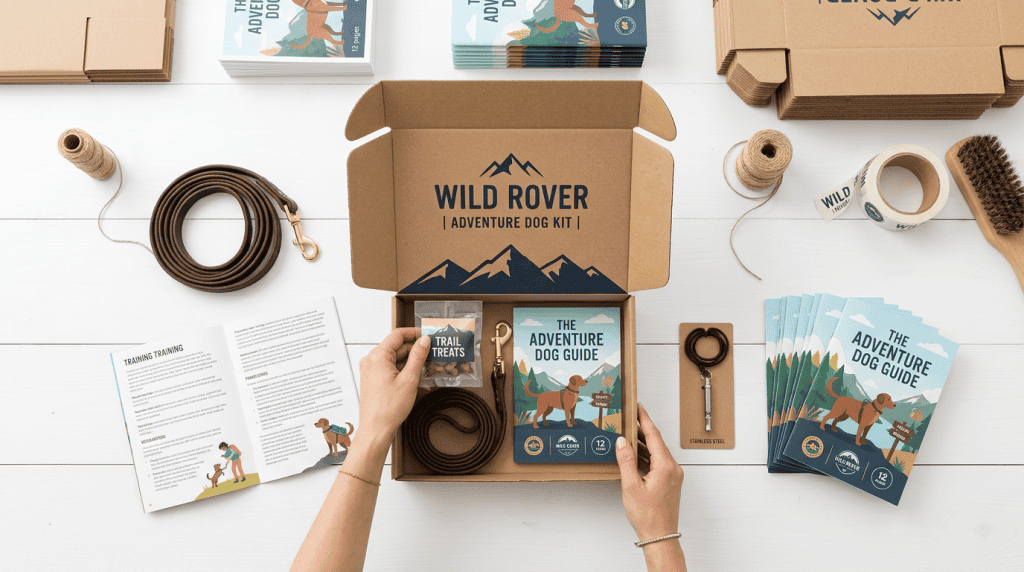
Product bundling increases average order value by 20-30% and bundle buyers have 2.7x greater lifetime value than single-item purchasers (Appstle, 2025). I didn’t know those exact numbers back then, but I figured out the principle quickly: sell a kit that nobody else offers, and you eliminate direct price comparison.
My strategy came down to four decisions that made the difference between my business and the thousands of sellers who launched around the same time and failed.
Decision 1: Private label, not arbitrage
I used a systematic evaluation approach similar to how I now assess AI tools — applied to physical product opportunities. Jungle Scout was my primary research tool. Private label was the model — 54% of Amazon sellers use it, and 56% of private label sellers make $5,000 or more per month (Jungle Scout, 2024). I chose three product categories: custom leather dog leashes, garden hose fittings kits, and high-pressure sprayer nozzle kits.
Decision 2: A sourcing edge most sellers don’t have
Everyone sources from Alibaba. That’s not an edge. I hired a Chinese interpreter and agent to go deeper into the supplier base and find manufacturers that weren’t already servicing dozens of other FBA sellers. This cost more upfront, but it meant my product quality and pricing weren’t identical to every other listing in my niche.
Decision 3: Bundles as the differentiation strategy
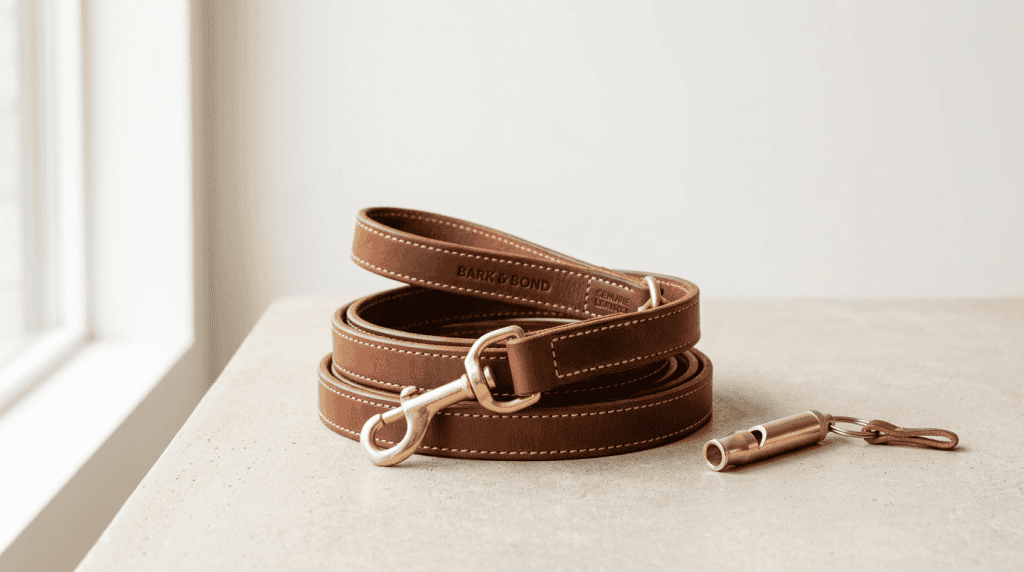
Instead of selling a leather dog leash by itself — where I’d compete on price with 50 other sellers — I bundled it with a dog training whistle and a training guide. Now my listing was unique. No one could directly undercut me because no one was selling the same combination. I used a third-party logistics company to handle the kitting, customs, and warehouse delivery to Amazon’s fulfillment centers.
Decision 4: Control the brand, control the listing
I handled all branding, product photography, and copywriting myself. Most sellers outsource this or use whatever photos their supplier provides. Doing it myself meant I could test and refine copy iteratively, and my listings looked different from the generic competition.

How Did I Actually Build and Launch Three Products?
Over 18 months as a one-person operation, I launched three private label products with a total upfront investment of about $9,000 — roughly $3,000 per product. That puts me right in the typical range: 64% of Amazon sellers start for under $5,000, and 61% of private label sellers invest $2,500 or more (Jungle Scout, 2024).
Here’s the actual sequence of how each product went from idea to live listing:
- Product research with Jungle Scout. I looked for products with steady demand, manageable competition, and room for differentiation through bundling. The leather dog leash category had high search volume but most listings were generic single-item offerings.
- Supplier sourcing through my interpreter. Instead of messaging the first five results on Alibaba, my agent dug into the supplier base to find manufacturers who weren’t already working with dozens of FBA sellers. This took longer but gave me better pricing and product quality.
- Branding and photography. I created the brand identity, shot all product photos myself, and wrote every word of listing copy. I tested and refined the copy continuously based on conversion data.
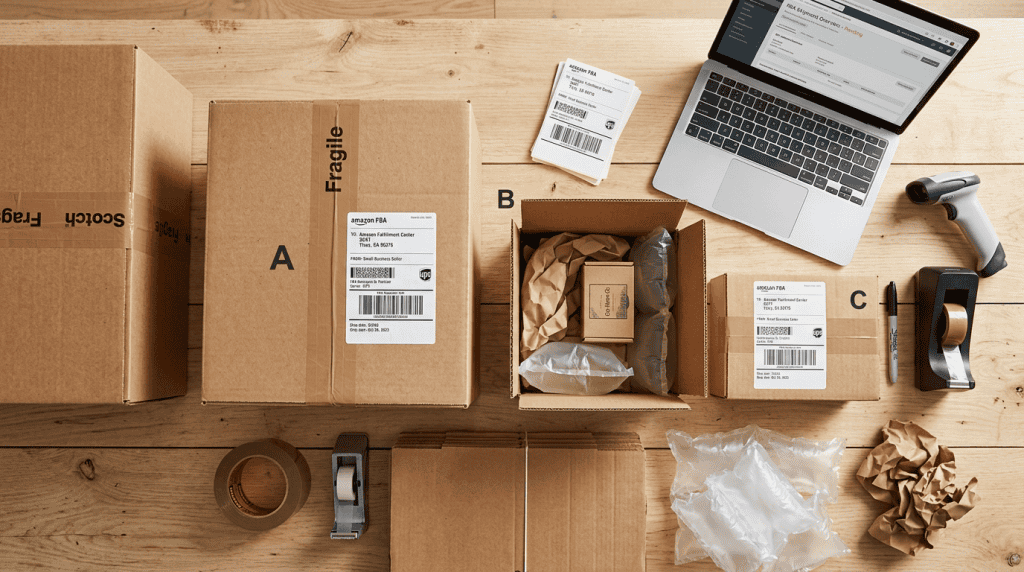
- Kitting and fulfillment. A third-party logistics company combined individual products into bundles, handled customs, and shipped inventory to Amazon’s fulfillment warehouses. This is where the differentiation happened — my leather dog leash became a “dog training kit” with a whistle and training guide included.
- Launch and optimize. Once live, I monitored performance, adjusted PPC campaigns, refined listing copy, and iterated on product photography. The copy testing and refinement was one of the biggest levers for increasing conversion rates.
All of this happened while I was still on active duty, transitioning out of the military, on terminal leave, and interviewing for my next career in business development. Time management wasn’t optional — it was survival.
What Were the Actual Results Across Three Products?
The combined revenue across all three products hit $264,000 in 18 months, with average profit margins around 30%. On a $9,000 total investment, that’s roughly $79,000 in gross profit — a return that made the late nights and logistics headaches worth it.
| Metric | My Results | Industry Average |
|---|---|---|
| Total revenue (18 months) | $264,000 | 40% of sellers make $1K-$25K/month |
| Profit margin | ~30% | 21% average SMB seller margin |
| Startup investment | $9,000 ($3K/product) | $3K-$10K for private label |
| Products launched | 3 | — |
| Time to profitability | Within first year | 58% profitable in year one |
Industry data: Jungle Scout 2024 State of the Seller Report
My margins outperformed the industry average because of the bundling strategy. When you’re selling a unique kit, you’re not competing on price. You’re competing on value. The dog leash bundle, for instance, had no direct comparable — shoppers couldn’t pull up three identical listings and pick the cheapest one.
What Almost Killed the Business?
The biggest threat to my FBA business wasn’t Amazon’s fees or competition. It was a logistics partner I didn’t vet properly.
I had hired a third-party company to handle customs, packaging, and kitting for my product bundles. They were managing the process of combining individual items into the kits that made my listings unique. Then they went dark. No responses to emails. No phone calls returned. The company effectively went out of business and took several thousand dollars worth of my inventory with them.
I had to set up kitting and packaging operations in my home office to keep orders flowing. Picture a military service member surrounded by dog leashes, training whistles, and shipping supplies in a spare bedroom. Not glamorous. But it kept the business alive while I found a replacement partner.
The lesson was painful and expensive: vet your partners like your business depends on it, because it does. Check references. Confirm their financial stability. Have backup plans. I learned this in the worst way possible, but I’ve never made the same mistake again.
The other ongoing headache was hijackers and copycats. Once my listings gained traction, competitors noticed. They’d copy my listing, undercut my price, and drive margins down. This is the reality of Amazon: less than 10% of seller registrations remain active long-term (Marketplace Pulse, 2024), but the ones who stick around are aggressive.
What Are the Key Takeaways From 18 Months Selling on Amazon?
The biggest lesson from this entire experience is knowing what to outsource, what to automate, and what to do yourself. That sounds simple. It isn’t. It takes trial and error, and the only way to learn it is by getting it wrong a few times.
1. Differentiate or die. Selling a commodity product on Amazon is a race to the bottom. Bundling products into kits gave me a unique listing that couldn’t be directly price-compared. Find your version of this — it doesn’t have to be bundling, but it has to be something.
2. Your supply chain is your business. The fancy listing copy and perfect product photos don’t matter if your inventory disappears because your logistics partner went under. Vet every partner. Confirm their operations. Have contingency plans.
3. Do the creative work yourself (at first). I wrote all my own copy, shot my own photos, and built my own brand. This wasn’t about saving money — it was about understanding what converts. Once you know what works, then you can outsource it intelligently.
4. The real competition isn’t other sellers — it’s Amazon’s fee structure. Amazon takes 50%+ of a typical seller’s revenue today (Marketplace Pulse, 2024). Your margins have to be good enough to survive that cut and still leave room for profit. Private label with strong differentiation is one of the few models that makes this math work.
5. Know when to walk away. I stopped after 18 months because the business demanded constant optimization, hijacker management, and competitive pivoting. I was starting a new career and couldn’t give it the attention it needed. Walking away from revenue is hard, but running a declining business into the ground is harder. The lessons I took from FBA — especially about running a one-person business — shaped everything I’ve done since.

Is Amazon FBA Still Worth Starting in 2026?
About a million new sellers join Amazon every year, with 2,000+ signing up daily (Marketplace Pulse, 2024). Third-party sellers now account for 62% of all paid units on the platform. The opportunity is real. So is the competition.
Any honest Amazon FBA case study will tell you the same thing: the fundamentals still work, but the bar is higher. If I were starting today, I’d do the same thing I did in 2016 but with one upgrade: I’d take my interpreter on a trip to China to find suppliers that aren’t on Alibaba at all. The sellers who win now are the ones with sourcing advantages that competitors can’t replicate by browsing the same supplier directory everyone else uses.
Amazon FBA isn’t dead. But the era of finding a random product on Alibaba, slapping a logo on it, and printing money is long gone. I wrote more about the real cost of starting an online business if you want the full picture. You need an edge. Bundling, unique sourcing, superior branding, better customer experience — pick one and go deep.
Frequently Asked Questions
Can you still make money on Amazon FBA as a beginner?
Yes, but expect a steeper learning curve than five years ago. According to the Jungle Scout 2024 State of the Seller Report, 58% of sellers become profitable within their first year. The key is starting with a private label product that has genuine differentiation — not just another generic item from the same Alibaba supplier everyone else uses. Budget at least $3,000-$5,000 for your first product if you’re going private label.
How much did you actually invest versus what you made?
I invested approximately $9,000 total ($3,000 per product across three products) and generated $264,000 in cumulative revenue over 18 months. After Amazon fees and cost of goods, my gross profit was roughly $79,000 at 30% margins. That doesn’t account for my time, PPC advertising costs, or the thousands lost to the logistics partner who disappeared. The net profit was still strong, but the headline revenue number always looks better than what you actually keep.
What would you do differently if you started over?
Two things. First, I’d vet my logistics and customs partners much more rigorously from day one. Losing inventory to a partner who went out of business was the most expensive lesson of the entire venture. Second, I’d build an off-Amazon sales channel earlier — a Shopify store or direct-to-consumer website — so I wasn’t 100% dependent on a platform that can change its fee structure or suspend your account at any time. For more on realistic monetization timelines, I break that down separately.
Noel Cabral is a retired military veteran, MBA, and PMP-certified business strategist with over 20 years of experience in internet marketing and ecommerce. He built a six-figure Amazon FBA business while on active duty and now writes about AI tools, digital business, and what actually works in online entrepreneurship at noelcabral.com.